
Is My Name Written?

“And I urge you also, true companion, help these women who laboured with me in the gospel, with Clement also, and the rest of my fellow workers, whose names are in the Book of Life” (Philippians 4:3)

The Church in Phillipi was made up of people from diverse backgrounds. Whilst there would have been many who came to faith in Philippi, in Acts 16 Luke acquaints us with only three. These likely represented the different types of people we will find around us today.

Firstly, there was a wealthy businesswoman named Lydia. She was said to have “heard us” (Acts 16:14), meaning that she was open to the Gospel and spiritually interested. Secondly, we read of a slave girl who was demon possessed (Acts 16:16) She was  attracted to the Gospel, as she followed them, but also antagonistic, as she shouted and disrupted them for days. We could refer to her as spiritually captive. Finally, there was the jailor who was hardened to the Gospel. He beat Paul and Silas (Acts 16:23), and seemed the least likely by human standards to come to faith. We can therefore speak of him as spiritually hostile.

By God’s grace, all three of these people came to saving faith in Christ.

We would do well to remember that their diversity of backgrounds and their initial response to the Gospel was no hindrance whatsoever to their coming to faith. Why was that the case? Their names were written in the book of life.

Continue reading “Is My Name Written?”

Christ the King

“That at the name of Jesus every knee should bow…and that every tongue should confess that Jesus Christ is Lord” (Philippians 2:10-11)

We live in a nation that has forgotten God, a nation that has known better days. We are living in a time where war is raging in the Middle East, Eastern Europe and in parts of Africa. We have seen the political temperature in America steadily rise over recent years, culminating in the horrific assassination of Charlie Kirk, a 31 year old Christian, on a university campus before the eyes of the world. Assassinated, it appears, for passionately debating and discussing ideas and politics from a Christian perspective.   

There is no end of discussion about how best to resolve the problems we face as a nation, about the causes of the wars, or how to stem the tide of political violence. These are but symptoms of the fundamental problem that faces us all.

Continue reading “Christ the King”

The Saints in Christ Jesus

“Paul and Timothy, bondservants of Jesus Christ, to all the saints in Christ Jesus who are in Philippi” (Philippians 1:1)

In the Old Testament, many things were set apart for God’s own purpose. The tabernacle (Exodus 25:8), and later the temple (1 Kings 6:13), were set apart to serve as a place where God would dwell among His people, where sacrifices were offered, foreshadowing the sacrifice of Jesus Christ. The tribe of Levi were set apart to serve God in the tabernacle and later the temple, “thus you shall separate the Levites from among the children of Israel, and the Levites shall be mine” (Numbers 8:14). The nation of Israel was set apart as God’s chosen people, “the Lord your God has chosen you to be a people for Himself, a special treasure above all the peoples on the face of the earth” (Deuteronomy 7:6). Likewise, tithes and offerings were set apart as a means for God’s people to demonstrate their love towards the Lord and support the temple ministries, “bring all the tithes into the storehouse” (Malachi 3:10).

Continue reading “The Saints in Christ Jesus”

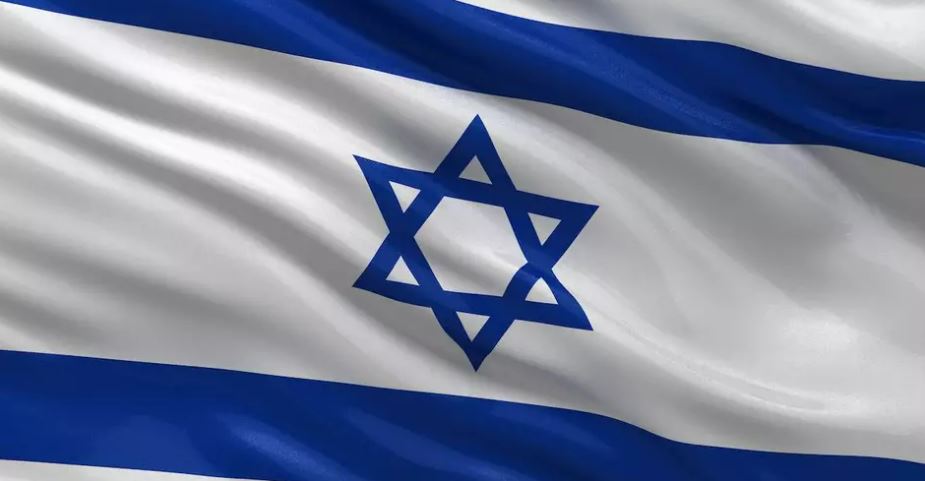
An Interview with Rev David Zadok (Israel)

Following our article on The Church in Israel last year (Here), we were grateful for the opportunity to interview Rev David Zadok, minister of Grace and Truth, a congregation located in Kannot, Israel.

Can you provide a brief background about yourself and how you came to Christ?

I was born in Israel to both Iraqi (Babylonian) Jews parents. From the age of three I grow up in Iran with my uncle and aunt. At age of 17, due to the Islamic revolution in Iran, my family sent me to San Diego, California. It was there that through the ministry of Navigators and New Life OPC (Orthodox Presbyterian Church), that the Lord converted me and was baptised there.

Continue reading “An Interview with Rev David Zadok (Israel)”

False Prophets – The Mormons

“Beware of false prophets, who come to you in sheep’s clothing, but inwardly they are ravenous wolves” (Matthew 7:15)

In our day, and on our own Island, false prophets are all around us. It is a familiar sight to see well-dressed younger men or women, usually American, walking the streets in pairs, with a backpack and a badge bearing the name of The Church of Jesus Christ of Latter Day Saints (LDS). They are missionaries better known to us as Mormons. They warmly introduce themselves as Christians. Their purpose is to engage people in conversation, to seemingly introduce them to Jesus Christ and invite them to their church. As commendable as this may appear to us, when we look a bit deeper, we find that we are actually faced with false prophets who appear in sheep’s clothing, but inwardly they are ravenous wolves.     

Continue reading “False Prophets – The Mormons”

False Prophets – The Knock at the Door

“Beware of false prophets, who come to you in sheep’s clothing, but inwardly they are ravenous wolves” (Matthew 7:15)

In our day, and on our own Island, false prophets are all around us. Many of us have answered a knock at the door not to find a familiar face standing there or even to find someone sharing the Gospel of Jesus Christ, which ought to be a welcome sight to any believer. Rather, as we open the door we discover that we are faced with two people, greeting us with smiles, seeking to share the Gospel according to the Jehovah’s Witnesses and to invite us to their church. They don’t introduce themselves as Jehovah’s Witnesses, but upon asking the question, our suspicions are confirmed.

Continue reading “False Prophets – The Knock at the Door”

The Church in Israel

“How much more will these, who are natural branches, be grafted into their own olive tree?” (Romans 11:24) 

In AD 70, Jerusalem was destroyed by the Romans under Titus. It is said that not a single Jew was left alive in Jerusalem, as all were either killed or taken away as prisoners. The Romans destroyed much of the city, including the second temple, the very centre of Jewish life. Most of the information on the destruction of Jerusalem comes from the writings of the contemporary Jewish historian Josephus (AD 37-AD 100). According to Josephus, over a million Jews died as a result of either violence or famine. It has been noted that this number exceeded the entire population of Jerusalem. This has been accounted for by the fact that many were thought to have travelled to Jerusalem to partake of the Passover, but got trapped in the siege.  

Last month marked the 75th anniversary of the creation of the modern nation state of Israel. On 14 May 1948, David Ben-Guiron, the Prime Minister of Israel, read out Israel’s Declaration of Independence, leaving Jews free to return to and govern themselves in their own land. Immediately after, Israel was attacked by 5 neighbouring Arab states. The Israeli-Palestinian issue remains one of the world’s most enduring conflicts with numerous political efforts made to resolve the Arab-Israeli conflict.  

Continue reading “The Church in Israel”

The Spirit and Scripture

“All Scripture is given by inspiration of God and is profitable for doctrine, for reproof, for correction, for instruction in righteousness (2 Timothy 3:16)

What is it to be “inspired?” We regularly hear and read of the term, commonly used in everyday life. Authors are said to be inspiring if they write a page turning novel, or a powerful real life story that motivates or encourages. Political leaders or ordinary members of the public are referred to as inspirational if they show great leadership or courage in the face of adversity. Musicians are referred to as inspiring if they write or perform a beautiful piece of music. In the sporting world we often hear of inspirational substitutions, which changed the course of a game.

What do theologians mean when they say that the Scriptures are inspired? Whilst the Scriptures certainly motivate and encourage, as well as cultivating leadership and courage, whilst the Scriptures are beautiful, leading to transformative change, that is not primarily what we mean by the inspiration of Scripture. What we mean when we say that the Scriptures are inspired is that the Bible is breathed out by God, as He prompted the writers of Scripture, who were moved by the Holy Spirit. “Prophecy never came by the will of man, but holy men of God spoke as they were moved by the Holy Spirit” (2 Peter 1:21). The idea is that the Spirit breathed the Word into men’s hearts and minds, so that they wrote exactly what He wanted them to write, and so that they were preserved from error, which would have otherwise been natural to them as sinful men. As they wrote, they recorded God’s own thoughts, as James Bannerman put it, “making the voice of God speak to us in a human accent.”

Continue reading “The Spirit and Scripture”

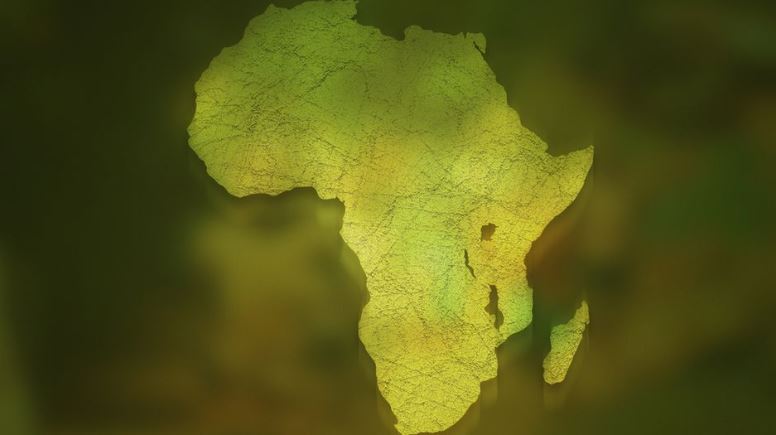
The Church in Africa

“…and you shall be witnesses to me in Jerusalem, and in all Judea and Samaria, and to the end of the earth” (Acts 1:8)

At the beginning of the twentieth century, from an estimated population of 140 million, there were around two million Christians in Africa. By the end of the twentieth century, the population had grown to around 810 million with around 380 million Christians.  

In Africa, as a whole, Christianity and Islam are split relatively equally, each representing around 45% of the population with the remainder represented by indigenous African religions. Christianity is more dominant in the south, whilst Islam is more dominant in the North. Africa’s population grew hugely in the 20th century, yet at the same time, Christianity saw a tremendous growth during that period.

Africa is one of the world’s richest continents, in terms of natural resources, yet it has some of the world’s poorest people. Poverty has a long history in Africa and the continent has a disturbing past, associated with colonialism and the transatlantic slave trade. At the same time, Africa is a continent of thousands of languages and cultures, with a vibrant and innovative people, along with some of the fastest growing economies in the world, including Rwanda and Tanzania.      

Having said that, when we consider Africa, what significance, if any, does the African church hold in our thinking?

Continue reading “The Church in Africa”

An Interview with Steven Lee, Sermon Audio Founder

On a recent visit to Scotland, along with his wife and 6 children, Steven Lee, the founder of Sermon Audio (Here), spent a few days in Lewis. We were thankful to meet him for a short time of fellowship and took the opportunity to  interview him.

What brings you to Stornoway and have you visited our islands before?

I have never been to Scotland before but it was always a personal dream of mine to visit the Isle of Lewis because of all that I read and heard about the revival that took place here on the island during the early 1950s under the ministry of Duncan Campbell. We don’t live in the past, but I believe it is both helpful and Scriptural to have a healthy remembrance of what God did in history so as to keep the fires of our hearts burning for the future. 

Continue reading “An Interview with Steven Lee, Sermon Audio Founder”